
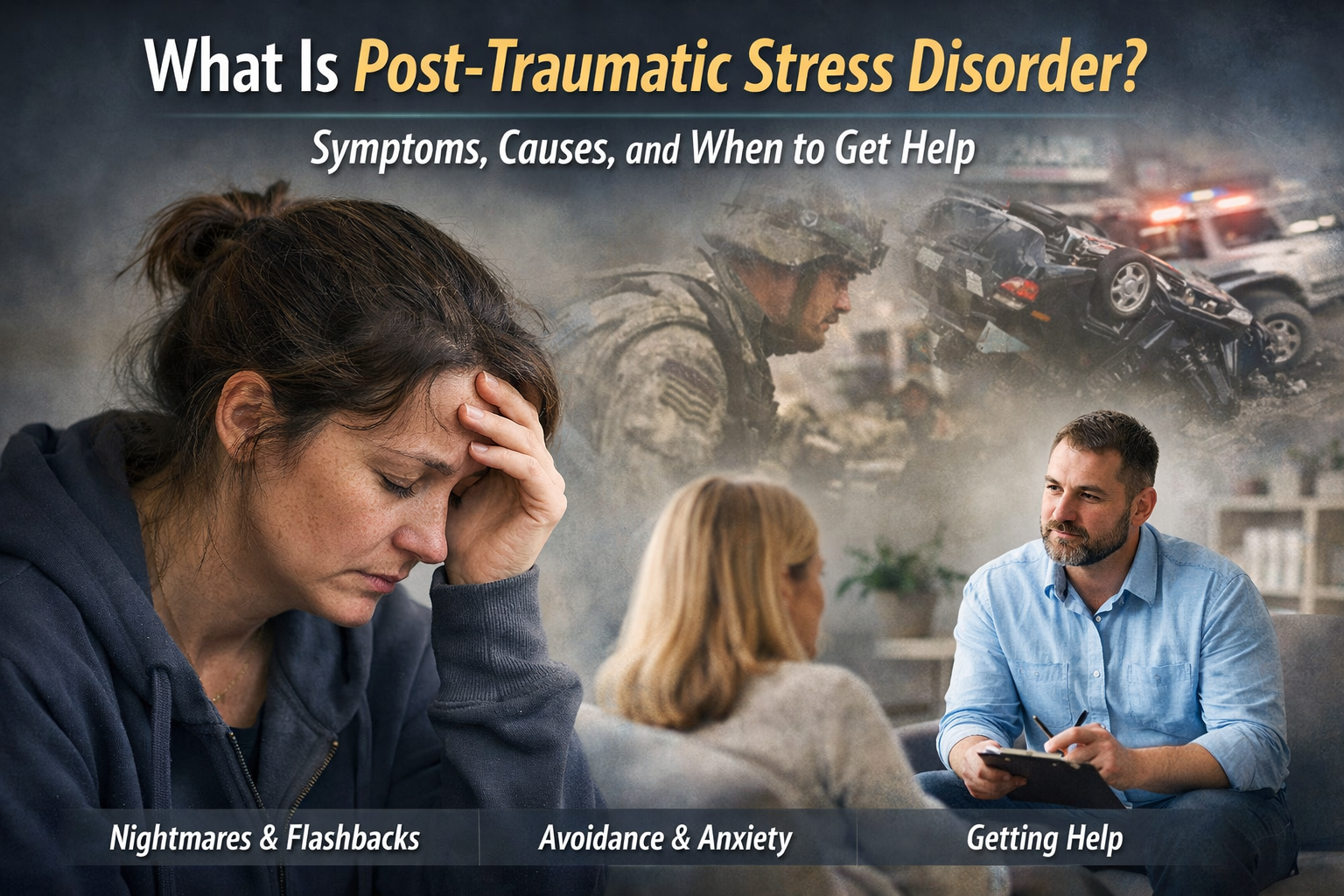
Post-traumatic stress disorder, or PTSD, is a mental health condition that can develop after someone experiences, witnesses, or is repeatedly exposed to a traumatic event. PTSD is more than a normal short-term stress reaction. It involves symptoms such as intrusive memories, avoidance, negative changes in mood and thinking, and heightened physical/emotional reactivity that continue over time and begin to interfere with daily life, relationships, sleep, concentration, or work.
Many people feel afraid, numb, overwhelmed, or “not themselves” after trauma. That can be a normal response in the immediate aftermath. PTSD is the diagnosis clinicians consider when those reactions do not settle, keep returning, or start shrinking a person’s life. NIMH notes that many people recover naturally over time, while people with PTSD continue to feel stressed or frightened even when they are no longer in danger.
Read more: Is it Time to Consult an Anxiety Therapist? Signs You Shouldn’t Ignore
The short definition of PTSD
A clear working definition is this: PTSD is a trauma-related disorder in which the brain and body continue to respond as if danger is still present, even after the traumatic event has ended. The APA describes PTSD as a psychiatric condition that may occur after experiencing or witnessing a traumatic event or series of traumatic events that feel emotionally or physically harmful or life-threatening. Examples include abuse, serious accidents, war, intimate partner violence, natural disasters, and medical trauma.
That definition matters because people often assume PTSD only applies to combat. It does not. PTSD can develop after many kinds of trauma, including experiences that happened in childhood, in relationships, in healthcare settings, or through repeated exposure to traumatic details in certain jobs.
Read more: Managing Anxiety: Therapeutic Techniques for Success
What makes PTSD different from a normal stress response?
The body’s stress response is designed to protect us. Fear, hypervigilance, sleep disruption, and emotional numbness can all show up after a frightening event. NIMH emphasizes that these reactions are common in the short term and that most people improve over time. PTSD becomes the concern when symptoms last, stay intense, or disrupt functioning.
In practical terms, PTSD is more than “I went through something bad and I still think about it.” It looks more like:
- repeated, unwanted re-experiencing of the event
- persistent avoidance of reminders
- changes in beliefs, mood, or emotional connection
- a body that stays keyed up, jumpy, irritable, or on guard
If those patterns are affecting work, school, sleep, parenting, relationships, or basic daily functioning, it is time to take them seriously. NIMH and NICE both frame PTSD around symptoms plus impairment in quality of life and day-to-day functioning.
Read more: Navigating Entrepreneurial Anxiety: Therapy Solutions
The 4 main symptom groups of PTSD
Mayo Clinic groups PTSD symptoms into four major categories. This is one of the clearest ways to explain the condition.
1) Intrusive memories
These are unwanted, distressing reminders that break into the present. They can include flashbacks, nightmares, distressing dreams, or intense emotional and physical reactions when something triggers the memory.
2) Avoidance
This means trying not to think about the trauma and avoiding people, places, activities, conversations, or situations that remind you of it. Avoidance can feel protective in the short term, but it often keeps PTSD going because life starts organizing itself around staying away from reminders.
3) Negative changes in thinking and mood
This can include guilt, shame, fear, emotional numbness, hopelessness, feeling detached from others, negative beliefs about yourself or the world, or trouble remembering important parts of the event.
4) Changes in physical and emotional reactions
This category includes being easily startled, constantly “on edge,” trouble sleeping, irritability, concentration problems, angry outbursts, or risky behavior. The APA also notes that PTSD can involve physical reactions such as increased heart rate, sweating, trembling, muscle tension, nausea, or dizziness in response to reminders.
Read more: Cultivating Success: Anxiety Therapy for High Achievers
What can cause PTSD?
PTSD can follow many kinds of trauma. The APA lists examples such as physical, sexual, or emotional abuse, natural disasters, serious accidents, war or combat exposure, intimate partner violence, terrorist acts, and medical illness or medical trauma.
That breadth matters because many people dismiss their symptoms when their trauma does not match a stereotype. For example, someone may say, “It wasn’t war, so maybe it doesn’t count.” Clinically, that is the wrong question. The more useful question is whether the experience was overwhelming, threatening, or deeply destabilizing—and whether symptoms are now persistent and impairing.
Who develops PTSD – and why some people do not
Not everyone who experiences trauma develops PTSD. NIMH states this directly: many people will experience trauma reactions, but only some go on to develop PTSD.
There is no single reason why one person develops PTSD and another does not. Risk can be shaped by things like the severity and duration of the trauma, prior trauma history, available support, other mental health conditions, and ongoing stress. What matters most for readers is that developing PTSD is not a sign of weakness. It is a sign that the stress response system did not reset normally after trauma.
Read more: Balancing Brilliance: Anxiety Therapy for High Achievers
Can children and teens develop PTSD too?
Yes. Children and teenagers can absolutely develop PTSD, but the symptoms do not always look the same as they do in adults. NIMH includes children and teens explicitly in its PTSD guidance, and NICE’s PTSD guideline covers recognition, assessment, and treatment in children, young people, and adults.
In younger people, trauma symptoms can show up as nightmares, clinginess, regression, irritability, behavior changes, concentration problems, re-enactment in play, school struggles, or physical complaints. That is one reason trauma can be missed: the child may not say, “I am having intrusive symptoms.” They may just look more dysregulated, withdrawn, oppositional, or frightened.
Read more: Academic Anxiety and The Importance of Therapy for Students
When to get help for PTSD
A good rule is this: get help when symptoms persist, intensify, or start taking over daily life. NIMH explains that PTSD should be considered when symptoms continue for an extended period and begin interfering with work, relationships, or other parts of life.
Here are practical signs it is time to seek support:
- nightmares or intrusive memories are ongoing
- you avoid more and more of life
- you feel constantly on guard or unsafe
- sleep, work, parenting, or relationships are suffering
- you are using alcohol, substances, or compulsive behaviors to cope
- symptoms are worsening instead of settling
NICE also emphasizes recognition, assessment, and coordinated care across age groups, which supports the idea that persistent trauma symptoms should not simply be “waited out” indefinitely.
Read More: Light Therapy for Depression and Anxiety: Common Mistakes and How to Avoid Them
How PTSD is treated
PTSD is treatable. NIMH describes treatment options that include psychotherapy, medication, or both, depending on the person and situation. NICE’s PTSD guideline covers recognition, assessment, and treatment and supports trauma-focused psychological care across children, young people, and adults.
In plain language, effective treatment usually helps people do some combination of these things:
- reduce avoidance
- process traumatic memories in a safer, more organized way
- improve sleep and nervous-system regulation
- rebuild a sense of safety, connection, and functioning
The exact therapy type depends on age, symptoms, history, and what fits the person best.
Read more: What Is the Goal of Acceptance and Commitment Therapy? A Simple, Evidence-Based Guide
How Momentum Psychology can support trauma recovery
Momentum Psychology already frames PTSD and trauma work as part of a broader trauma-informed care approach. Its existing PTSD explainer describes PTSD as a recovery problem after trauma, and its trauma therapy page highlights how trauma, PTSD, grief, and loss can affect stress response, health, relationships, work, and parenting.
That makes this article a good top-of-funnel education piece for readers who are still trying to understand what PTSD is before they consider care. A calm, non-salesy bridge here would be: if someone recognizes themselves in the symptom patterns above, the next step is not to self-diagnose forever. It is to get a trauma-informed evaluation and a treatment plan that fits the severity, the history, and the goals of recovery.
FAQs
What is the definition of post-traumatic stress disorder?
- PTSD is a mental health condition that can develop after someone experiences, witnesses, or is repeatedly exposed to trauma, with symptoms that persist and interfere with daily functioning.
How is PTSD different from normal stress after trauma?
- Short-term fear and distress after trauma can be normal. PTSD is considered when symptoms continue over time, stay intense, and disrupt work, relationships, sleep, or daily life.
What are the four main symptoms of PTSD?
- The four major symptom groups are intrusive memories, avoidance, negative changes in thinking and mood, and changes in physical and emotional reactions.
Can PTSD happen after emotional abuse or medical trauma?
- Yes. APA materials include emotional abuse and medical illness/medical trauma among experiences that can be associated with PTSD.
When should someone get help for PTSD?
- Get help when symptoms persist, get worse, or start affecting daily functioning, relationships, sleep, school, or work.
Can children and teens develop PTSD?
- Yes. NIMH and NICE both include children and young people in PTSD guidance, though symptoms may show up differently than in adults.