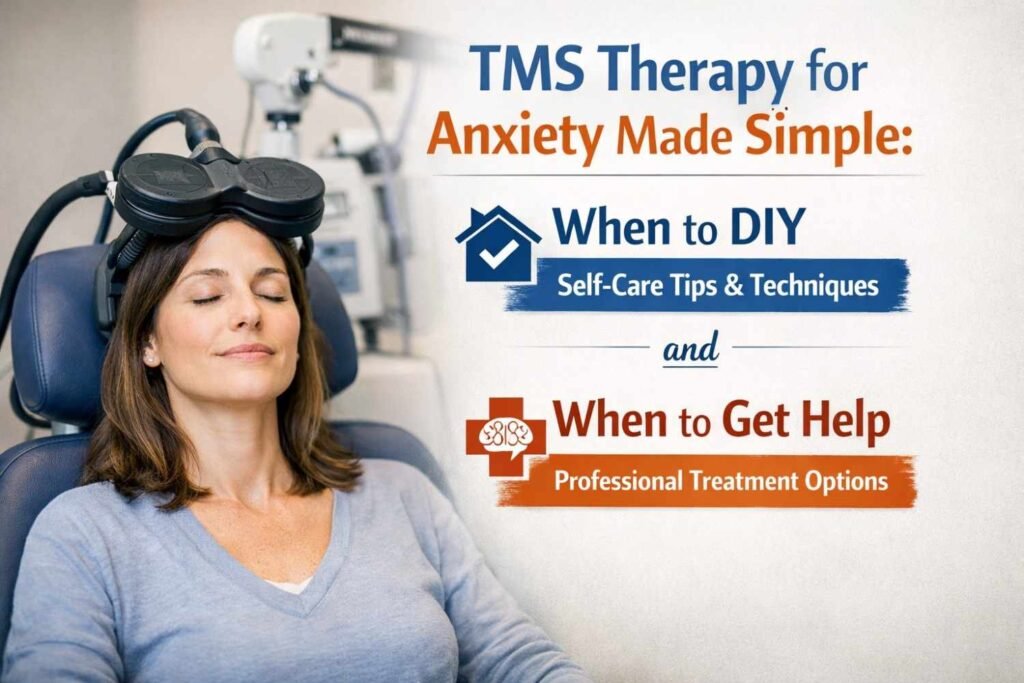
TMS (transcranial magnetic stimulation) is a clinic-based, noninvasive treatment cleared in the U.S. for major depression and OCD. For generalized anxiety, evidence is promising but still developing. There is no safe “DIY TMS.” If symptoms are mild and recent, start with CBT-style skills and routine basics; if anxiety is impairing or hasn’t improved, talk to a clinician—and ask whether TMS is appropriate based on your history and diagnoses.
What TMS is—and what it isn’t (30-second read)
Table of Contents
ToggleTMS uses magnetic pulses to stimulate targeted brain circuits. Sessions occur in a clinic, typically daily across several weeks. Most people experience mild side effects (scalp tingling, headache); seizures are rare but screened for. In the U.S., TMS devices are cleared for depression and OCD; “anxiety” alone is not a cleared indication (research is ongoing).
Why that matters: You’ll see lots of marketing that blurs the line between “anxiety relief” and “anxiety indication.” Your decision should reflect what TMS is actually cleared for, the diagnoses you carry (e.g., depression or OCD alongside anxiety), and the track record of first-line therapies you’ve already tried.
Does TMS help anxiety symptoms?
Many patients with depression or OCD report reduced anxiety during a TMS course. For generalized anxiety disorder (GAD) specifically, multiple studies suggest benefit—but protocols vary and the evidence is still preliminary. Translation: TMS can be part of a plan, especially when depression or OCD is present, but it’s not a universal first-line treatment for anxiety.
Cleared vs. studied (quick table)
Category | Conditions | What to know |
FDA/clearance (U.S.) | Major depressive disorder; OCD (certain devices/protocols); some migraine indications | Strongest regulatory support; clinics widely offer these |
Studied / emerging | GAD, PTSD, others | Results vary; off-label use requires careful clinical oversight |
Is there a safe “DIY TMS”?
No. TMS requires clinic equipment, protocols, and medical screening. At-home devices marketed online are usually tDCS (a different technology with mixed evidence). Don’t buy hardware to self-treat anxiety. If you’re not ready for clinic care, your DIY lane is behavioral: skills, routines, and measurement that lower anxiety’s “fuel.”
Your DIY lane (safe, evidence-aligned self-steps)
These actions are low risk and compatible with professional care. Use one or two at a time for 1–2 weeks; track outcomes and iterate.
1) Worry scheduling (CBT)
- What to do: Pick a 10–20-minute slot early evening to jot worries + actions. Outside that slot, write a cue (“Add to worry list 7:30 pm”) and return to your day.
- Why it helps: Containment. You reduce bedtime rumination without pretending worries don’t exist.
2) Micro-exposures to avoided situations
- What to do: List 5–10 “small uncomfortable” steps (e.g., ask a quick question in class, start a conversation with a barista). Do one tiny rep daily, notice the outcome, and repeat.
- Why it helps: Gently reverses avoidance, which is a main maintainer of anxiety.
3) Reassurance audit
- What to do: For 1 week, tally how often you ask for or give reassurance (texts, “Are you sure?” loops). Choose one scenario to delay or reduce by 25–50%.
- Why it helps: Endless reassurance feels supportive but can lock in anxiety. We’re aiming for support that builds confidence, not dependence.
4) Sleep & light basics
- What to do: Set a fixed wake time, get morning light (5–10 min outside), and avoid late caffeine.
- Why it helps: Stabilizing circadian signals often reduces baseline anxiety and improves therapy outcomes.
5) Two-number dashboard (5 minutes/week)
- What to track: Anxiety severity (0–10) and avoidance (0–10) for your top 2 situations.
- Why it helps: You can’t improve what you don’t measure. Numbers make decisions clearer: do I keep the plan, level it up, or get more help?
When to get help (and when to ask about TMS)
Talk to a clinician when anxiety lasts weeks, impairs school/work/relationships, causes frequent panic, or co-occurs with depression or OCD. Consider a TMS consultation when you’ve already tried first-line treatments (therapy with CBT/ERP and/or medications) and your clinician believes your diagnoses and history make TMS a reasonable next step.
What a clinic pathway typically looks like
- Consultation & screening: medical history, metal/implant checks, seizure risk, medication review.
- Protocol selection: standard rTMS, intermittent theta-burst (iTBS), or device-specific options; for OCD, some centers use deep TMS coils/protocols.
- Course of care: usually daily sessions on weekdays over several weeks (protocols vary).
- Monitoring: brief side effects (headache, scalp discomfort) are common; clinicians monitor symptoms, function, and any adverse events.
- Follow-up: some patients do maintenance sessions or continue therapy/meds for consolidation.
The decision table: DIY vs. get help (save this)
Situation | DIY now | When to escalate |
Mild, new anxiety (<4–6 weeks) | Worry scheduling, micro-exposures, reassurance audit, sleep/light basics; track two numbers weekly | If scores don’t improve after 4–6 weeks or avoidance expands |
Anxiety + depression | DIY + therapy consult (CBT/ACT), discuss meds | If multiple trials underperform → ask about TMS for depression |
Anxiety + OCD-type fears | DIY supports + ERP therapy | Discuss TMS for OCD at a qualified center |
Frequent panic, high impairment | Short DIY steps while booking care | Prioritize clinical evaluation; discuss options beyond DIY |
Health/implant considerations | — | Medical screening is required before any TMS |
Risks, side effects, and safety in plain language
- Common: scalp discomfort/tingling during sessions, mild headache or fatigue afterward; typically fade over time.
- Less common but important: mood shifts, lightheadedness.
- Rare: seizures—hence the screening process.
- Good screening matters: disclose all implants/metal, neurological history, medications, and sleep issues.
- Expectations: relief often builds over weeks, not days; some people need protocol adjustments or maintenance sessions.
Costs, coverage, and alternatives (quick guide)
- Coverage varies by country/insurer and often requires documentation (diagnosis, prior treatments tried).
- Alternatives or complements: structured CBT/ERP, medication (as appropriate), sleep/light/caffeine protocols, and targeted skills for worry and avoidance.
- Smart strategy: make progress visible with a simple dashboard; it helps you and your clinician evaluate what’s working.
- Not as a stand-alone indication. In the U.S., TMS is cleared for depression and OCD. Anxiety symptoms often improve when those conditions are treated, but GAD-only use is still being studied.
- No. TMS is clinic-based. At-home devices online are usually tDCS—that’s different technology, with mixed results. Don’t self-treat with hardware without medical guidance.
- Expect weeks, not days. Many protocols run daily sessions over 4–6+ weeks, with progress reviewed along the way.
- Ask about TMS for OCD at clinics that use the appropriate coils/protocols. Pair it with ERP therapy, which remains central for OCD.
- Use the DIY lane: worry scheduling, micro-exposures, reassurance audit, and routine basics (sleep/light/caffeine). Track two numbers weekly and reassess in 2–4 weeks.